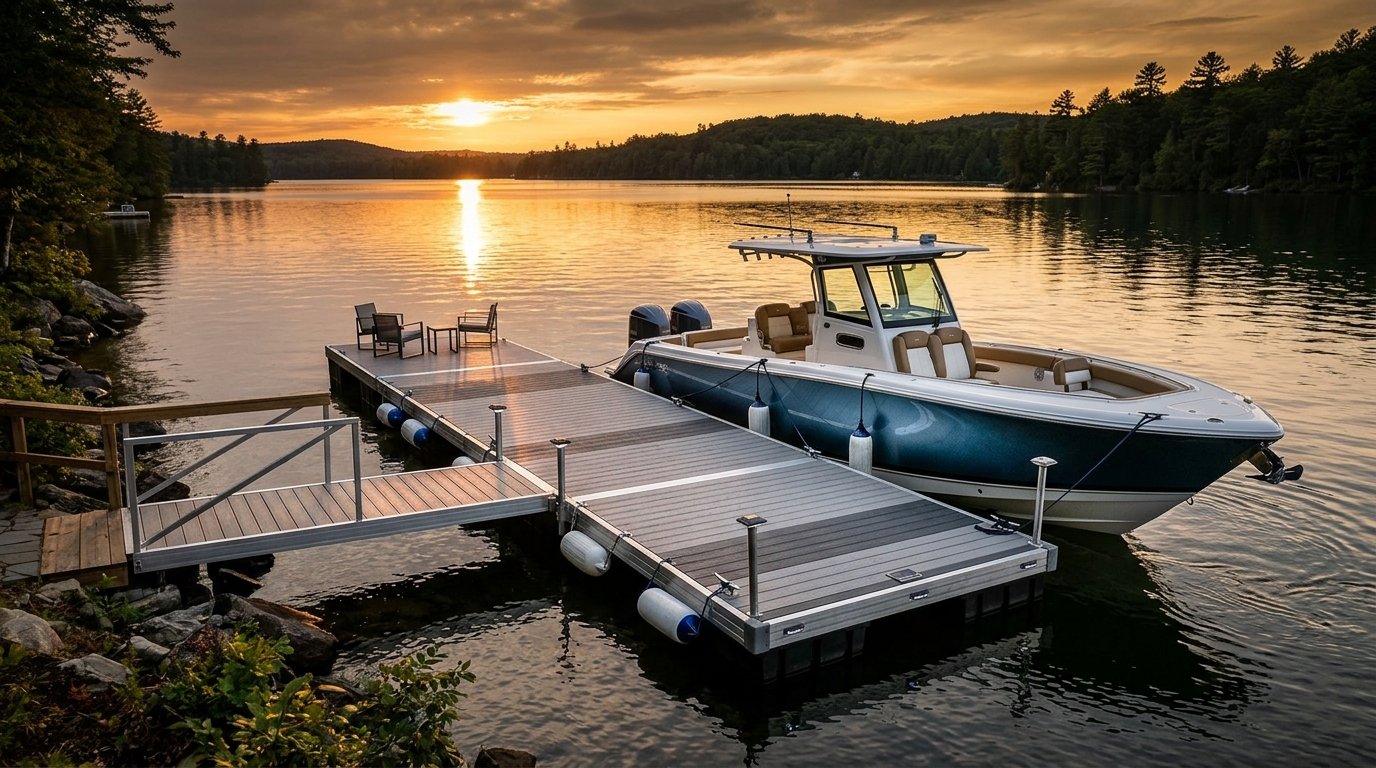
Navigating waterfront construction and waterfront property upgrades requires an authoritative, engineering-backed boat dock guide. Installing or maintaining a private boat dock adds significant recreational value and property equity to your lakefront or coastal home. However, fluctuating water depths, winter ice heaving, and strict environmental permitting guidelines make selecting the right dock architecture crucial.
This comprehensive boat dock guide breaks down floating docks, fixed piling docks, and aluminum pipe docks by installation costs, material lifespans, anchoring systems, and seasonal maintenance requirements.
Boat Dock Architecture: Types, Costs & Lifespans
| Dock Construction Type | Cost per Linear Foot | Average Lifespan | Best Water Environment |
|---|---|---|---|
| Modular High-Density Polyethylene (HDPE) Floating | $35 – $95 / ft | 25 – 35 years | Fluctuating reservoirs, tidal bays, zero maintenance required |
| Fixed Wood Timber Piling Dock | $65 – $160 / ft | 15 – 25 years | Stable water depths, coastal intracoastal waterways, heavy boat moorings |
| Aluminum Frame Removable Pipe Dock | $45 – $110 / ft | 30+ years | Northern freshwater lakes subject to severe winter freezing and ice heaving |
| Heavy Concrete Floating Pontoon Dock | $150 – $350 / ft | 40 – 50 years | Commercial marinas, large yachts, open water wave chop |
Floating Docks vs. Fixed Piling Docks
The primary decision for waterfront property owners is choosing between floating and stationary dock systems:
When to Choose a Floating Dock:
- Fluctuating Water Levels: If your body of water experiences tidal swings greater than 2 to 3 feet or is a hydroelectric reservoir with seasonal drawdowns, floating docks automatically rise and fall with water levels.
- Effortless Boarding: The freeboard height between the dock surface and your boat gunwale remains constant, making step-on boarding and mooring line adjustment simple and safe.
- Modular Flexibility: Modern polyethylene dock cubes or aluminum-framed poly-float docks can be reconfigured or expanded into “L” or “T” shapes anytime.
When to Choose a Fixed Piling Dock:
- Solid Rock-Steady Stability: Driven wood, steel, or composite pilings provide a firm, unyielding platform that doesn’t bob or sway in boat wakes.
- Heavy Boat Lift Capability: Permanent electric overhead cradle boat lifts or 4-post piling lifts require driven pilings to suspend heavy 10,000 to 25,000 lb vessels completely out of the water.
Essential Dock Hardware & Mooring Protection
Protecting your boat and dock from wave energy damage requires marine-grade hardware:
- Hot-Dipped Galvanized or 316 Stainless Steel: Never use standard zinc-plated hardware on docks. In coastal saltwater, use grade 316 stainless steel bolts; in freshwater, hot-dipped galvanized steel offers excellent longevity.
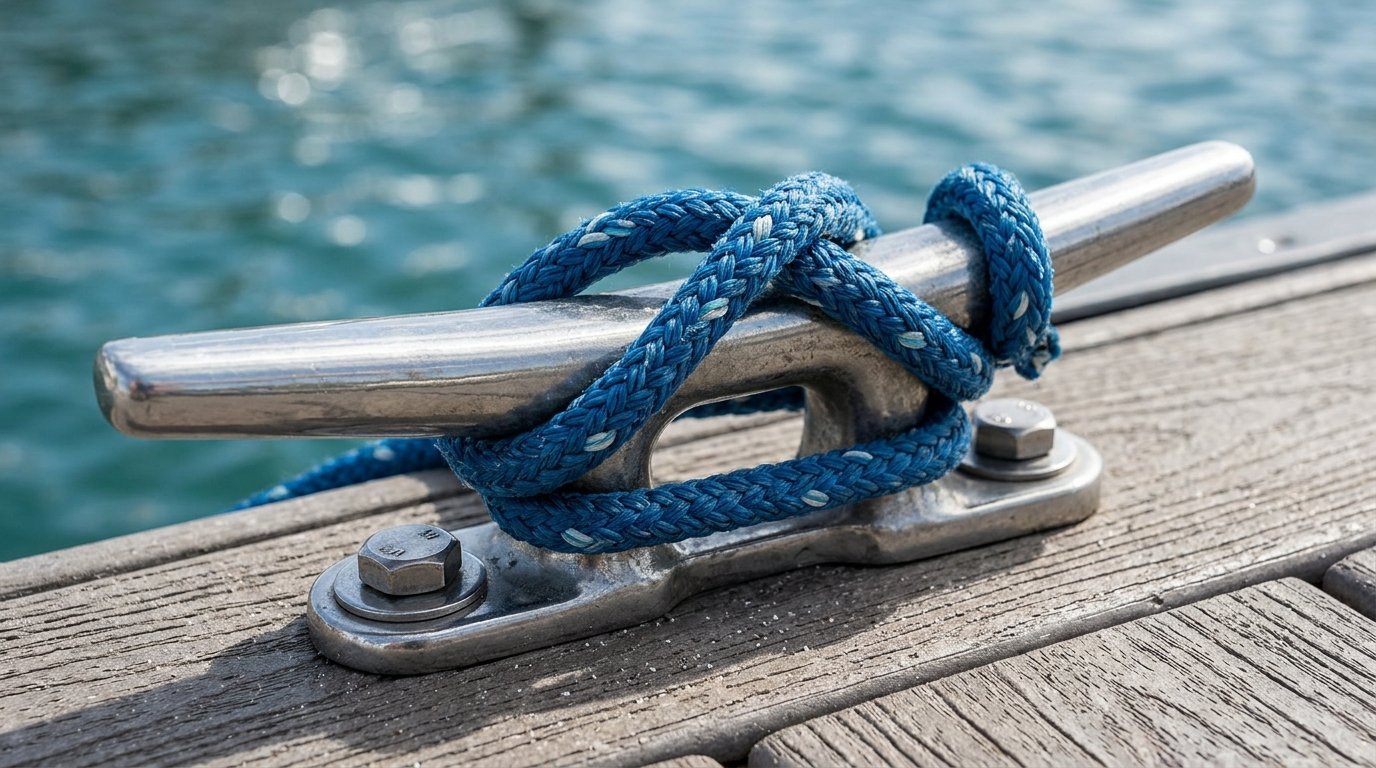
- Mooring Cleats & Piling Bumpers: Heavy cast S-cleats (10-inch or 12-inch) should be through-bolted with backing plates rather than lag-screwed. Line dock edges with non-marring vinyl rub rails and attach PVC piling bumpers to cushion boat hulls.
- Mooring Whips: For docks exposed to heavy open-water boat wakes, fiberglass mooring whips apply continuous outward tension, keeping your boat centered 3 to 4 feet off the dock face.
Permits & Environmental Regulations
Before driving pilings or installing dock anchors, verify jurisdiction requirements. Most waterfront docks require permits from the U.S. Army Corps of Engineers (USACE), state Department of Natural Resources (DNR), or local conservation commissions to protect submerged aquatic vegetation and shoreline habitats. For boat storage alternative costs, consult our master boat storage cost guide and dry stack boat storage guide.
When planning your annual budget, accurate boat dock guide metrics help you avoid unexpected expenses and extend vessel longevity.
Frequently Asked Questions About Boat Docks
Do I have to remove my boat dock in the winter?
In northern climates where lakes freeze solid, removable aluminum pipe and floating docks must be pulled out of the water before ice forms. Expanding lake ice sheets and shifting wind-blown ice will crush metal frames, bend pipe legs, and jack pilings right out of the lakebed.
What is the best decking material for a boat dock?
Composite decking (such as Trex or WearDeck) and mineral-based composite panels are the gold standard. They resist splintering, rot, and algae slime, and stay cooler under bare feet than traditional pressure-treated pine lumber.
How do I anchor a floating dock in deep water?
Floating docks in deep water are anchored using heavy galvanized steel bottom chains crossed in an “X” pattern and attached to 500 to 2,000 lb concrete anchor blocks on the lake floor, or secured via stiff-arm shore brackets and piling guide hoops.
What is the minimum water depth needed for a boat dock?
For standard recreational runabouts and center consoles, a minimum low-water depth of 4 to 5 feet at the boat slip is recommended to prevent outboard propellers and cooling intakes from striking mud or suctioning silt.
Published by Boat Maintenance Guide Waterfront Editorial Desk. Designed in accordance with American Boat and Yacht Council (ABYC) and USACE dock construction guidelines. For certified engineering specifications, consult official protocols published by U.S. Army Corps of Engineers (USACE).
Following this proven boat dock guide strategy protects your marine investment, enhances safety on the water, and minimizes unexpected mechanical repairs. For ongoing maintenance schedules and certified specifications, revisit our boat dock guide recommendations each season.