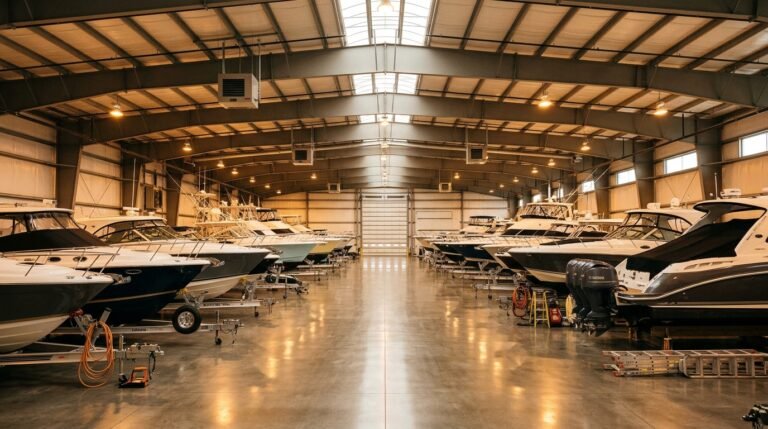
Calculating your exact indoor boat storage cost is one of the most critical financial decisions for owners of 20 to 26-foot powerboats, center consoles, and pontoon boats. While outdoor yard storage may seem cheaper initially, indoor storage protects your vessel against severe gelcoat UV chalking, mold infestation, freeze-thaw hull stress, and costly theft.
Nationwide in 2026, indoor boat storage cost for a 20 to 26-foot vessel ranges between $180 and $650 per month. Pricing depends fundamentally on whether you choose heated climate-controlled enclosed bays, unheated secure boat barns, or marina dry-stack facilities, as well as the unique footprint dimensions of your boat and trailer package.

Indoor Boat Storage Cost Breakdown by Storage Type
Storage facilities calculate fees either by a fixed bay size (e.g., 12×30 ft or 12×35 ft unit) or by the linear foot overall length (LOA) including the trailer tongue and tilted outboard engine.
| Storage Type | Monthly Rate (20-26ft) | Winter Season (6 Months) | Key Benefits & Protections |
|---|---|---|---|
| Heated Climate-Controlled Bay | $350 – $650 / mo | $2,100 – $3,900 | Regulated 55°F temp, prevents freeze damage, no winterizing antifreeze needed |
| Unheated Enclosed Storage Unit | $220 – $420 / mo | $1,320 – $2,520 | 100% UV, snow, and hail protection; full winterization still required |
| Covered Canopy / 3-Sided Carport | $150 – $280 / mo | $900 – $1,680 | Overhead sun and rain shield; side air exposure requires heavy canvas cover |
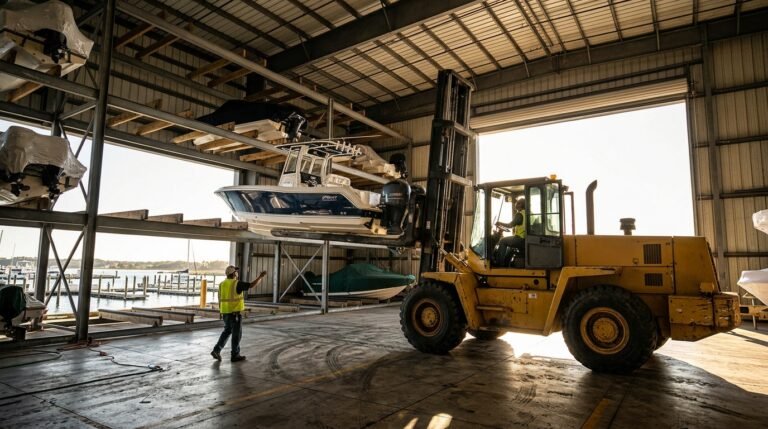
| Marina Dry Stack Rack | $360 – $750 / mo | $2,160 – $4,500 | Includes forklift launch, washdown, no personal trailer required |
The True Footprint Math: Why 20-26ft Boats Need 30ft+ Bays
One of the most common rookie mistakes boat owners make when reserving an indoor storage unit is measuring only the manufacturer hull length (e.g., 22 feet). To calculate true storage bay requirements, you must factor in the complete trailer rig dimensions:
- Trailer Tongue & Coupler: Standard boat trailers extend 3 to 4.5 feet past the bow eye. A swing-away folding tongue can save 2.5 to 3 feet of critical length.
- Outboard Motor Overhang: An outboard engine tilted in travel mode extends 2.5 to 3.5 feet behind the transom.
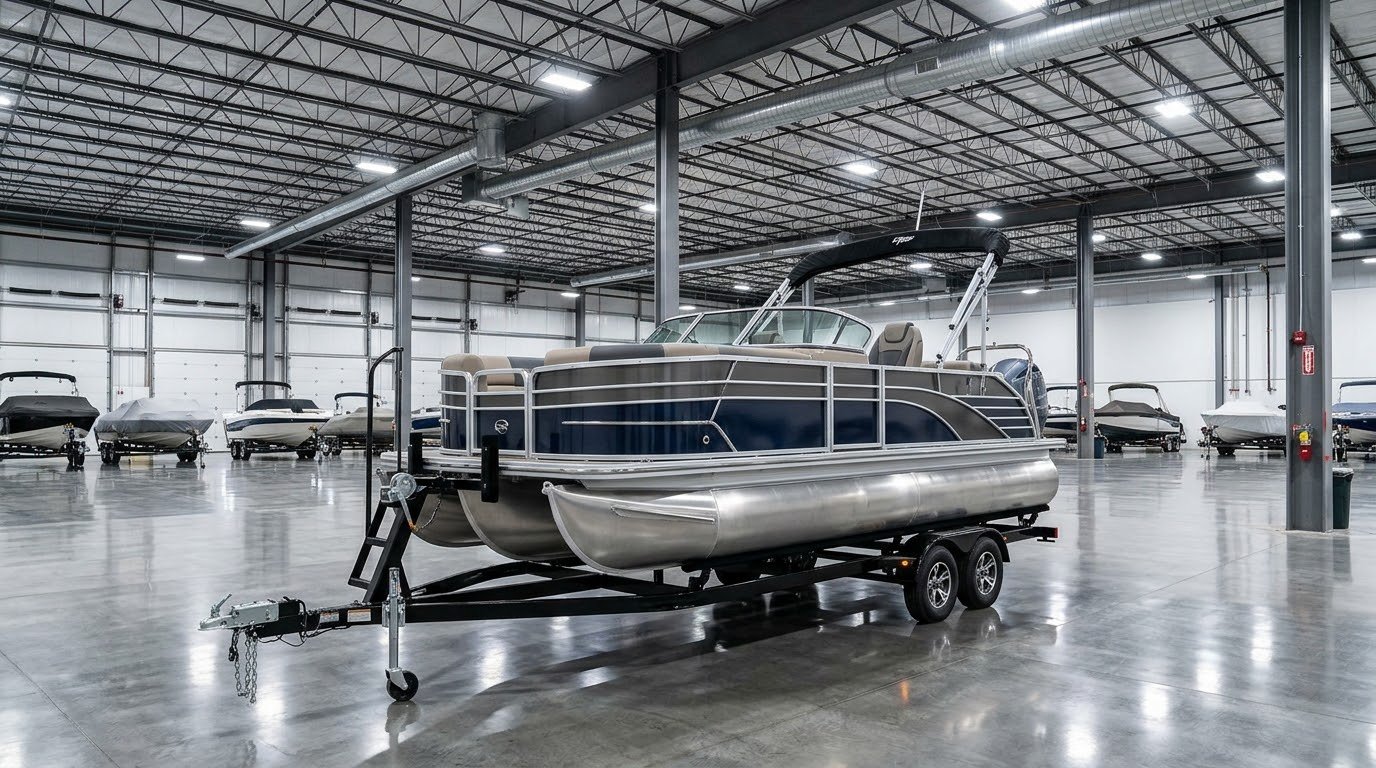
- Pontoon Beam & Bimini Clearance: Pontoon boats feature a wide 8.5-foot beam and tall console windshields. Stored pontoons often measure 9 to 11 feet in total height on the trailer, requiring a minimum 12-foot garage door clearance.
Therefore, a 22-foot deck boat or pontoon typically has an overall travel length of 28 to 30 feet. Always measure from coupler tip to propeller tip before signing a lease.
Regional Cost Factors Across the United States
Storage prices fluctuate dramatically depending on latitude and winter severity:
- Northern & Great Lakes Region (MI, WI, MN, OH): High demand for heated indoor winter storage drives rates up ($300 to $550/mo for a 6-month winter contract). Facility reservations frequently open in July and sell out by October.
- Southern Sunbelt & Gulf States (FL, TX, NC): Indoor storage is primarily sought for UV protection and hurricane-rated wind sheltering ($250 to $500/mo).
- Midwest Inland Lakes (MO, TN, IN): Extensive availability of rural commercial pole barns and mini-storage complexes keeps pricing competitive ($180 to $320/mo).
Indoor Storage Preparation Checklist
Before placing your 20-26ft vessel in indoor storage for several months, complete these maintenance steps to ensure your boat stays in pristine condition:
- Winterize Engine & Plumbing: In unheated facilities, non-toxic propylene glycol antifreeze flush is mandatory. Follow our boat winterization guide to protect manifolds, blocks, and freshwater holding tanks.
- Disconnect & Maintain Batteries: Lead-acid and AGM batteries self-discharge over time. Remove batteries or connect a multi-bank smart maintenance charger following our marine battery care guide.
- Thorough Hull Washdown: Remove salt, scum lines, and river grime to prevent gelcoat staining. Read our guide on marine hull and deck cleaning for recommended biodegradable cleaners.
- Trailer Bearing Service: Inspect trailer wheel bearings, seals, and grease levels to prevent seized hubs when towing in the spring. Check our comprehensive boat trailer maintenance checklist.
- Master Storage Overview: For full comparative pricing including outdoor parking and wet slips, see our main boat storage cost guide.
When planning your annual budget, accurate indoor boat storage cost metrics help you avoid unexpected expenses and extend vessel longevity.
Frequently Asked Questions About Indoor Boat Storage Cost
Is heated indoor boat storage worth the extra money?
Yes, especially in northern regions where winter temperatures fall below freezing for weeks. Heated storage maintains an ambient temperature of 50-55°F, preventing freeze damage to engine blocks, water heaters, and livewells, while eliminating winter condensation and mold growth.
What door height is required for a 22-26ft boat on a trailer?
Most standard center consoles with T-tops, wakeboard towers, and pontoon boats on trailers require a garage door opening of at least 11 to 12 feet high. Standard residential 8-foot garage doors will not accommodate these boats without folding the tower or bimini top flat.
Do storage facilities require boat insurance?
Yes. Commercial boat storage facilities universally mandate active marine hull and liability insurance. You will be required to provide a certificate of insurance listing the facility as an interested party upon signing.
Can I leave a trickle charger plugged in at an indoor storage facility?
Some premium facilities provide dedicated 15-amp outlets in each bay for battery tenders, sometimes included or billed at $15 to $30 extra per month. Lower-cost facilities prohibit unattended electrical cords due to commercial fire codes, requiring you to disconnect batteries.
Published by Boat Maintenance Guide Editorial Desk. Verified in accordance with American Boat and Yacht Council (ABYC) safety standards and National Marine Manufacturers Association (NMMA) storage storage protocols. For certified engineering specifications, consult official protocols published by BoatUS Foundation storage safety guidelines.
Following this proven indoor boat storage cost strategy protects your marine investment, enhances safety on the water, and minimizes unexpected mechanical repairs. For ongoing maintenance schedules and certified specifications, revisit our indoor boat storage cost recommendations each season.