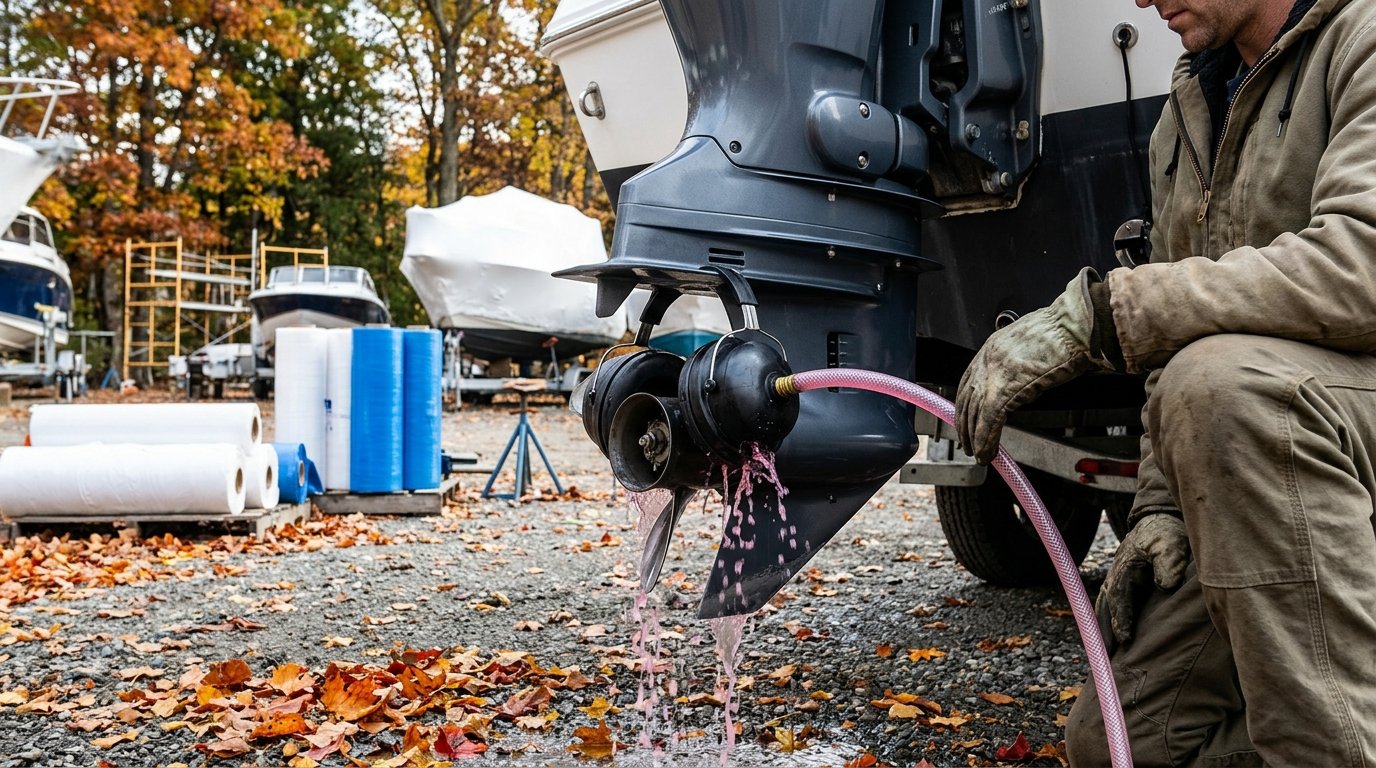
Freezing winter temperatures represent the single most destructive seasonal threat to recreational boats. Mastering this step-by-step boat winterization guide will protect your engine block from hairline freeze cracks, prevent burst freshwater plumbing, and safeguard your boat against mold and moisture ruin. When water freezes, it expands by approximately 9% with hydraulic forces capable of splitting cast-iron engine blocks and bursting heat exchangers wide open.
Whether you choose DIY lay-up in your driveway or hire a certified marine marina, executing this comprehensive boat winterization guide checklist ensures your vessel emerges turn-key ready when spring arrives.

Boat Winterization Checklist: Materials & Systems
| Boat System | Winterization Procedure | Required Marine Chemicals / Supplies | DIY Risk Level |
|---|---|---|---|
| Engine Cooling Passages (Inboard / Stern Drive) | Drain raw water petcocks completely; flush with -50°F to -100°F non-toxic antifreeze | Propylene glycol marine antifreeze (5-8 gallons), flusher muffs | High (Engine block replacement costs $6,000+) |
| Engine Fuel System & Injectors | Add marine fuel stabilizer; run engine 15 min to circulate treated fuel; fog cylinders | STA-BIL 360 Marine stabilizer, aerosol fogging oil | Moderate (Prevents ethanol phase separation and stuck rings) |
| Freshwater Plumbing & Marine Head | Drain fresh water tank; pump pink RV/marine antifreeze through sinks, showers, and toilet | Potable non-toxic pink antifreeze (3-5 gallons) | Low (Prevents burst pipes and cracked water pumps) |
| Lower Unit Gearcase Lubricant | Drain old gear oil; inspect for milky water; pump fresh high-performance marine lube | SAE 90 marine gear oil, lower unit pump kit, new drain plug gaskets | Moderate (Trapped water freezes and cracks gearcase housing) |
Step 1: Stabilize Fuel & Fog Cylinders
- Fuel Stabilization: Fill the gas tank to approximately 90% capacity to minimize air space and condensation. Add marine-grade fuel stabilizer (such as STA-BIL 360 Marine) at the recommended dosage. Run the engine for 15 minutes at idle or on flusher muffs so the treated fuel circulates through the entire fuel injection system, high-pressure pumps, and fuel rails.
- Fogging the Cylinders: On carbureted engines, spray aerosol marine fogging oil into the intake until the engine chokes with white smoke and dies. On modern EFI/DFI outboards, remove the spark plugs, spray a 3-second burst of fogging oil or pour a teaspoon of Yamalube/Quicksilver 2-stroke oil directly into each spark plug hole, and rotate the flywheel manually to coat the cylinder walls and piston rings.
Step 2: Antifreeze Flush & Lower Unit Service
Warning: Never use automotive ethylene glycol (green) antifreeze! It is lethal to pets and aquatic wildlife. Always use non-toxic, virgin propylene glycol marine antifreeze with corrosion inhibitors rated to -50°F or -100°F.
- Outboard Engines: Modern outboards are self-draining when stored in the vertical downward position. Lower the engine completely after flushing with freshwater. If storing in sub-freezing temperatures, ensure all water drains from the lower unit.
- Inboards & Stern Drives (I/O): Warm the engine to open the thermostat. Open all brass block drain plugs, manifold petcocks, and circulation hose clamps to let raw water drain completely. Then, connect a winterization tank filled with 5 to 7 gallons of -100°F propylene glycol to flusher muffs and run the engine until pure pink fluid streams from the exhaust.
- Gearcase Lube Drain: Drain the lower unit gear oil from the bottom magnetic plug. If the oil is dark honey or green, it is healthy. If the oil is milky or opaque grey, water has penetrated the propeller shaft seals; replace seals before freezing winter weather expands and splits the aluminum gearcase.
Step 3: Interior Prep, Batteries & Shrink-Wrapping
- Batteries: Disconnect negative battery terminals to avoid parasitic drain. In freezing climates, remove batteries and store them on a wooden bench connected to a multi-stage smart maintainer. Consult our marine battery care guide.
- Mildew & Moisture Prevention: Remove life jackets, cushions, and food. Place moisture-absorbing desiccant tubs (DampRid) inside the cabin and engine compartments to stop mold spores.
- Shrink-Wrapping: A professional 7-mil white shrink-wrap cover sheds heavy snow loads. Ensure the installer incorporates at least four weather-proof louvered vents to maintain cross-ventilation. For winter storage bay pricing, read our indoor boat storage cost guide and master boat storage guide.
When planning your annual budget, accurate boat winterization guide metrics help you avoid unexpected expenses and extend vessel longevity.
Frequently Asked Questions About Boat Winterization
How much does professional boat winterization cost?
Professional boat winterization at a marine service shop typically costs between $300 and $650 for an outboard boat, and $450 to $950 for an inboard or stern-drive boat, including fuel treatment, oil change, gearcase lube, and antifreeze flush.
Can I leave water in my boat livewell over winter?
No. Trapped water inside livewell aerator pumps, supply hoses, and macerator drain lines will freeze, crack the plastic pump impellers, and rupture hoses, resulting in catastrophic hull flooding when launched in the spring. Disconnect lines or pump pink marine antifreeze through livewells.
Is it safe to use a space heater inside my boat engine compartment?
Never place residential household space heaters inside a boat engine bay. Bilge compartments collect gasoline vapors; non-ignition-protected residential heaters can trigger devastating fuel explosions and boatyard fires. Only use UL-listed ignition-protected marine bilge heaters.
What temperature kills an un-winterized boat engine?
A sudden hard freeze where ambient temperatures drop below 28°F (-2°C) for more than 4 to 6 continuous hours is enough to freeze standing water inside engine block cooling jackets, cracking the cast-iron cylinder walls.
Published by Boat Maintenance Guide Certified Marine Mechanics Desk. Inspected in accordance with American Boat and Yacht Council (ABYC) lay-up guidelines. For certified engineering specifications, consult official protocols published by BoatUS Foundation marine lay-up recommendations.
Following this proven boat winterization guide strategy protects your marine investment, enhances safety on the water, and minimizes unexpected mechanical repairs. For ongoing maintenance schedules and certified specifications, revisit our boat winterization guide recommendations each season.