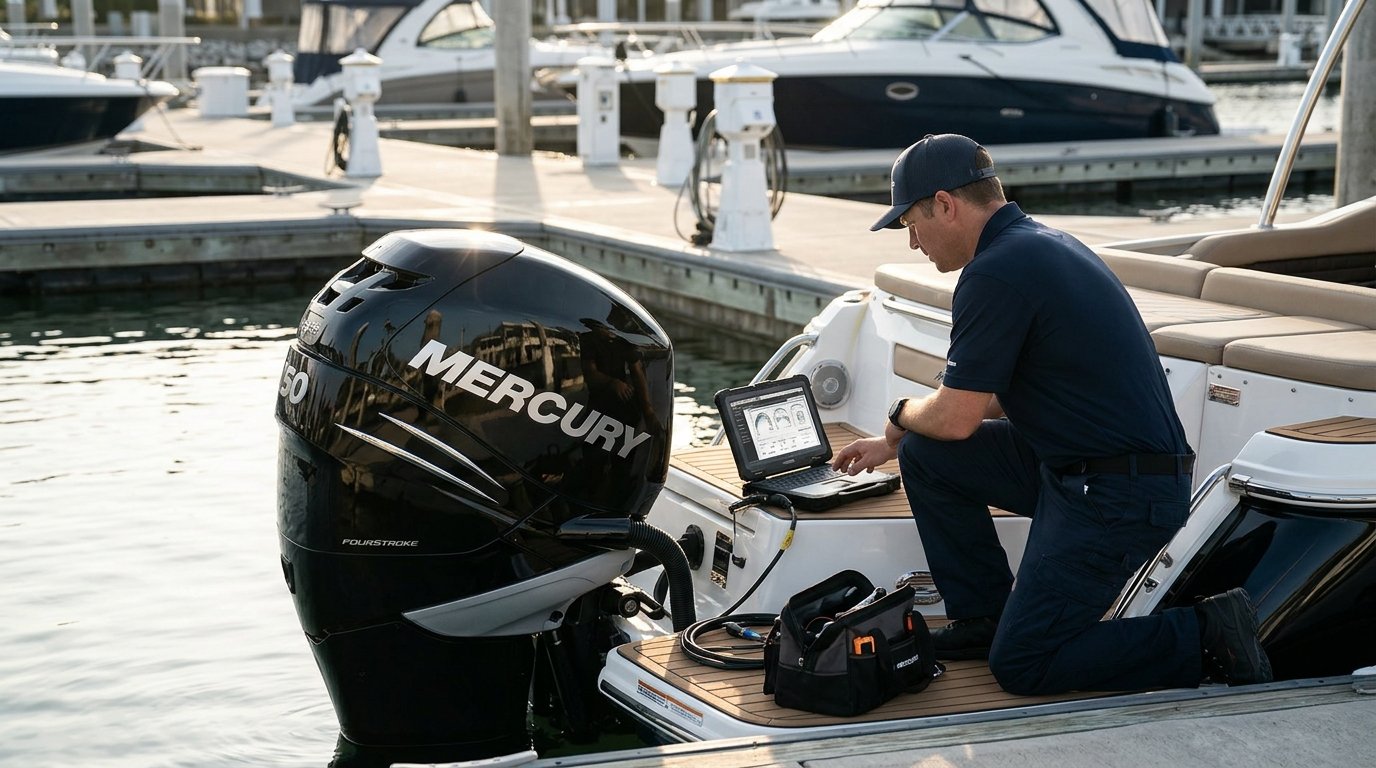
Accurate, disciplined Mercury outboard troubleshooting can make the difference between a frustrating tow back to the harbor and a flawless weekend of boating. Whether you pilot a Mercury FourStroke 115, a Verado supercharged offshore powerhouse, or a Pro XS tournament tournament bass motor, Mercury Marine propulsion systems utilize sophisticated SmartCraft digital engine management systems to monitor engine health in real time.
This authoritative Mercury outboard troubleshooting guide breaks down SmartCraft audible horn beeps, fuel lift pump failures, ignition coil misfires, and battery voltage thresholds so you can diagnose issues quickly and get back on plane.
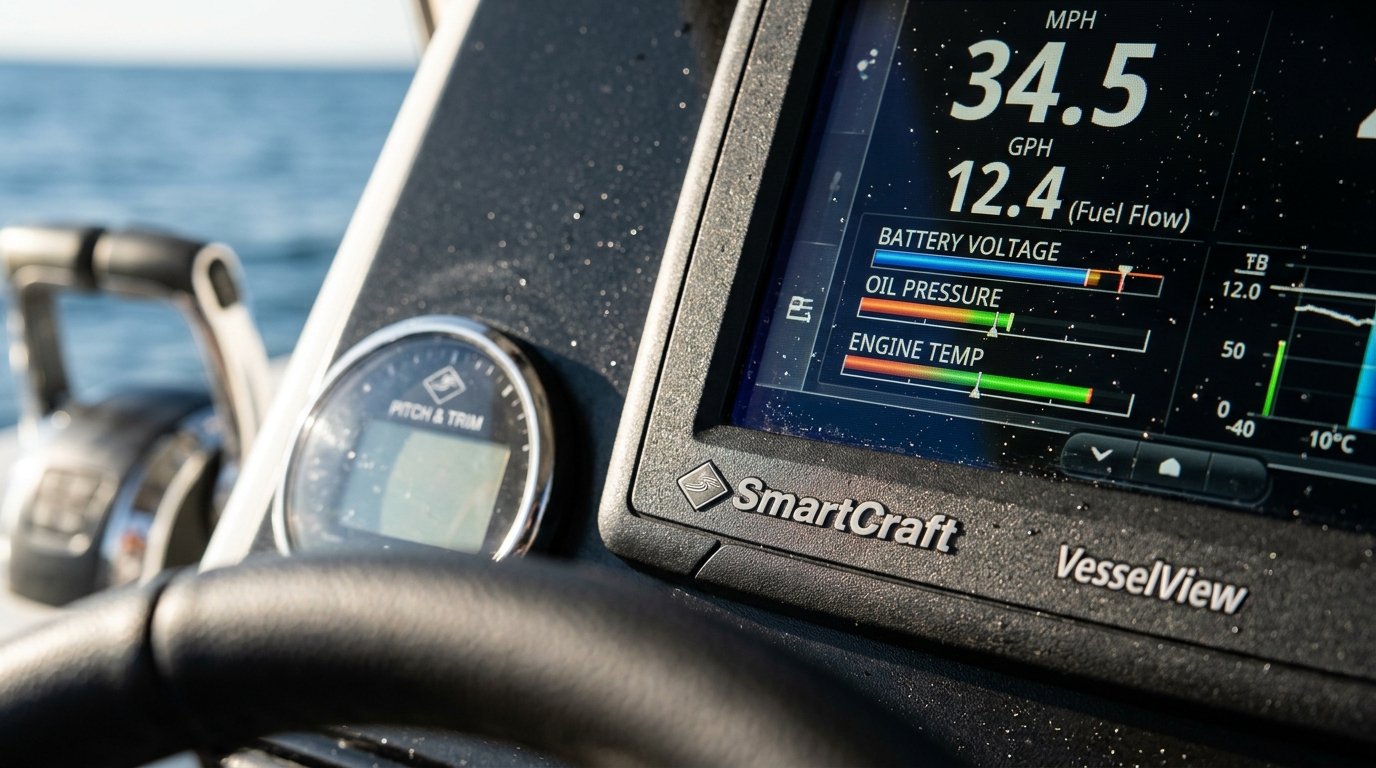
Decoding Mercury SmartCraft Warning Horn Beep Codes
Modern Mercury outboards communicate engine faults through an under-helm piezo warning buzzer horn and SmartCraft digital instrument clusters. Learning these audio beep signatures is vital:
| Audio Alarm Signature | SmartCraft Fault Type | Immediate Engine Reaction | Required Diagnostic Step |
|---|---|---|---|
| Continuous Steady Tone (No pause) | Critical Engine Overheating or Zero Oil Pressure | Engine Guardian cuts RPM to idle | Shut engine down immediately. Check oil level dipstick; inspect water intake grates for weeds/plastic bags |
| 4 Beeps Every 2 Minutes | Water in Fuel Sensor Triggered or Low 2-Stroke Reservoir | Engine operates normally but alerts captain | Inspect fuel/water separator filter bowl; drain collected water; check onboard engine oil tank level |
| Intermittent Rapid Beeping | Sensor Failure (MAP, TPS, or Knock Sensor) | Guardian limits maximum power to 50-75% | Scan ECM using Mercury G3 diagnostic scan tool or VesselView Mobile app |
| Single Quick Beep at Ignition Key ON | System Self-Test Passed | Normal operating state | Proceed with engine start sequence |
Mercury Starting Problems: The High Battery Voltage Requirement
One of the most overlooked aspects of Mercury FourStroke and Verado troubleshooting is battery cranking voltage. Mercury PCM/ECM computers require a minimum of 10.5 volts during active engine cranking to energize the fuel injectors and digital direct ignition coils.
If your marine battery has a weak cell or corroded wing nuts on the terminals, the starter motor may still spin the engine, but the battery voltage will dip to 9.8 volts. At this sub-threshold level, the Mercury computer refuses to fire the ignition coils, resulting in long cranking with no ignition.
- Always Use Hex Nuts: ABYC standards and Mercury Service Bulletins explicitly forbid the use of finger-tight wing nuts. Use stainless steel nylon locknuts or hex nuts torqued with a wrench.
- Verify Cold Cranking Amps (CCA): Modern Mercury outboards (150hp to 400hp) demand batteries with at least 800 to 1,000 Marine Cranking Amps (MCA) or 1,000 Cold Cranking Amps (CCA). Review our comprehensive marine battery care guide to choose AGM vs lithium LiFePO4 batteries correctly.
Fuel Supply Module (FSM) & Lift Pump Diagnostics
Mercury FourStroke engines utilize an integrated Fuel Supply Module (FSM) containing low-pressure lift pumps, high-pressure fuel injection pumps, and an internal fuel cooling circuit. Common fuel symptoms include:
- Engine Stalls at Low Speed: If the mechanical or electric pulse lift pump diaphragm develops pinholes, it cannot draw fuel from distant boat fuel tanks against primer bulb suction resistance. Inspect the primer bulb—if it collapses flat while the engine runs, check for a stuck tank anti-siphon valve or blocked fuel tank vent line.
- FSM Float Switch Failure: The internal float needle inside the FSM can stick due to ethanol gumming, causing the fuel bowl to overflow out of the brass atmospheric vent into the engine cowling or starve the high-pressure pump.
- VesselView Mobile Diagnostics: Installing a Mercury VesselView Mobile module into your engine’s NMEA 2000 harness allows you to read active fault codes, fuel burn rates, and cooling temperatures directly on your smartphone.
Cooling System & Thermostat Maintenance
Mercury engines feature dual-stage thermostats designed to reach operating temperature rapidly (typically 120°F to 140°F) to prevent fuel condensation. If your Mercury engine triggers an overheat warning horn:
- Inspect the water pump telltale stream. If flow is weak, check the lower gearcase water intake pickups for sand or marine growth.
- Remove and inspect the thermostat housing on the top of the cylinder block. In saltwater use, salt build-up can jam the thermostat poppet open or closed.
- Review our primary outboard motor troubleshooting guide for universal ignition and fuel delivery tests, and check our Yamaha outboard troubleshooting guide to compare marine diagnostic procedures.
- For electrical diagram references, consult our marine electrical systems guide.
When planning your annual budget, accurate Mercury outboard troubleshooting metrics help you avoid unexpected expenses and extend vessel longevity.
Frequently Asked Questions About Mercury Outboard Troubleshooting
What does Mercury Engine Guardian mode mean?
Mercury Engine Guardian is an automatic fail-safe safety system programmed into the engine control module (ECM). When a critical fault occurs—such as high cylinder head temperature, zero oil pressure, or low battery voltage—Guardian cuts engine power to a restricted RPM range (typically 2,000 RPM or idle) to allow the captain to limp to safety without blowing the engine powerhead.
Why is my Mercury outboard primer bulb sucking flat?
A collapsed, flat primer bulb indicates a severe fuel restriction between the primer bulb and the boat’s gas tank. The most common causes are a clogged anti-siphon valve on the tank pickup tube, a blocked fuel tank vent hose preventing air entry, or a kinked fuel supply hose.
Can I use automotive spark plugs in a Mercury outboard?
No. Mercury marine outboards require specific marine-grade spark plugs (such as NGK Laser Iridium with specific thread reaches and internal resistors) calibrated for marine combustion temperatures and RF noise suppression to avoid interfering with SmartCraft telemetry.
How do I clear stored fault codes on a Mercury outboard?
Non-critical fault codes that have been resolved will clear automatically after a designated number of successful engine run cycles without the error recurring. Critical faults can be cleared instantly by a marine dealership technician using Mercury Computer Diagnostic System (CDS G3) or via certified aftermarket marine scan tools.
Published by Boat Maintenance Guide Certified Marine Mechanics Desk. Inspected in accordance with Mercury Marine Service Manuals and ABYC E-11 standards. For certified engineering specifications, consult official protocols published by Mercury Marine Official Service Specifications.
Following this proven Mercury outboard troubleshooting strategy protects your marine investment, enhances safety on the water, and minimizes unexpected mechanical repairs. For ongoing maintenance schedules and certified specifications, revisit our Mercury outboard troubleshooting recommendations each season.


