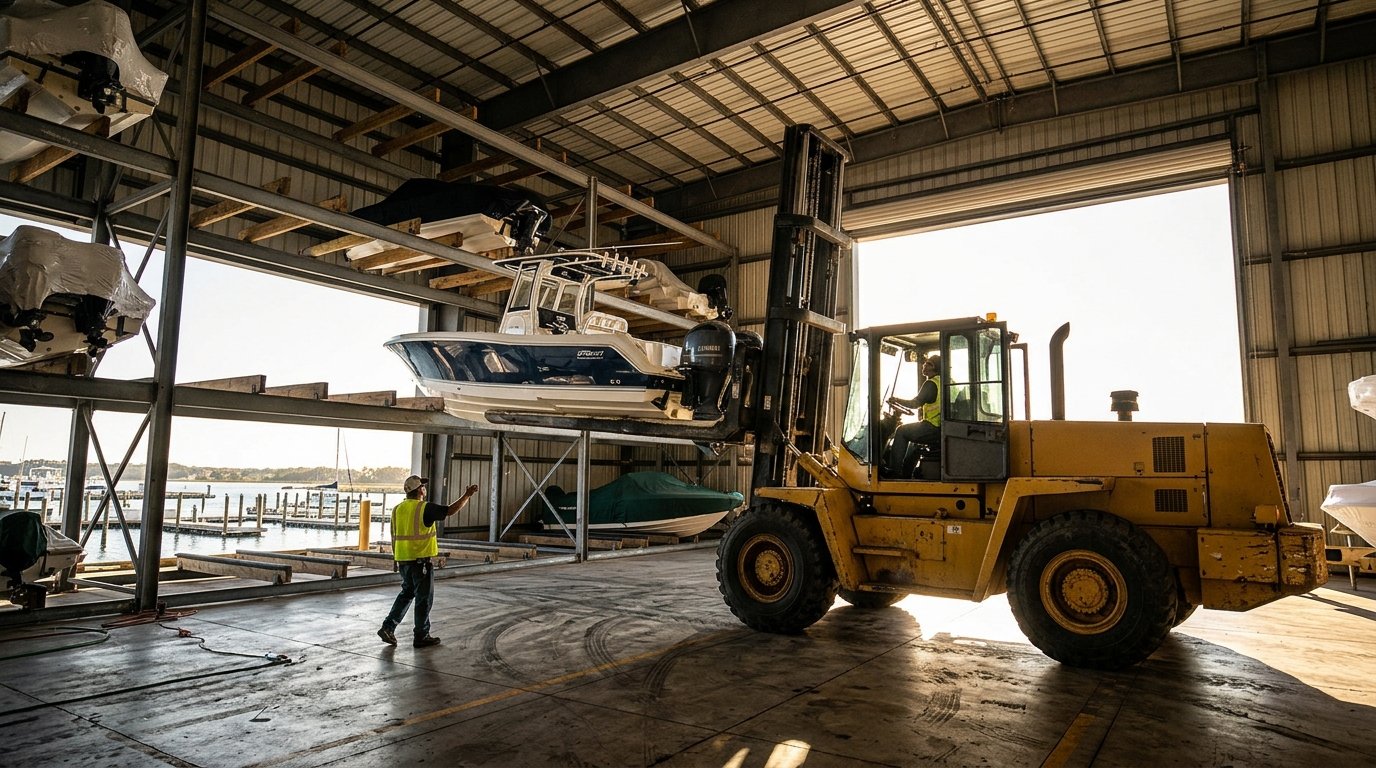
Understanding true dry stack boat storage cost variables is essential for recreational boaters and offshore anglers who want hassle-free access to open water without the burdens of trailering or the aggressive fouling of wet slips. Commonly referred to as “in-and-out rack storage” or “boat barn storage,” dry stacks offer an engineered indoor solution that preserves your gelcoat, eliminates bottom painting, and delivers turn-key valet boating on demand.
Across the United States, dry stack boat storage cost averages between $15 and $35 per linear foot per month. For a standard 24-foot center console or dual-console family boat, owners typically invest between $360 and $875 per month, depending heavily on coastal proximity, enclosed storm ratings, boat beam, and included marina concierge services.
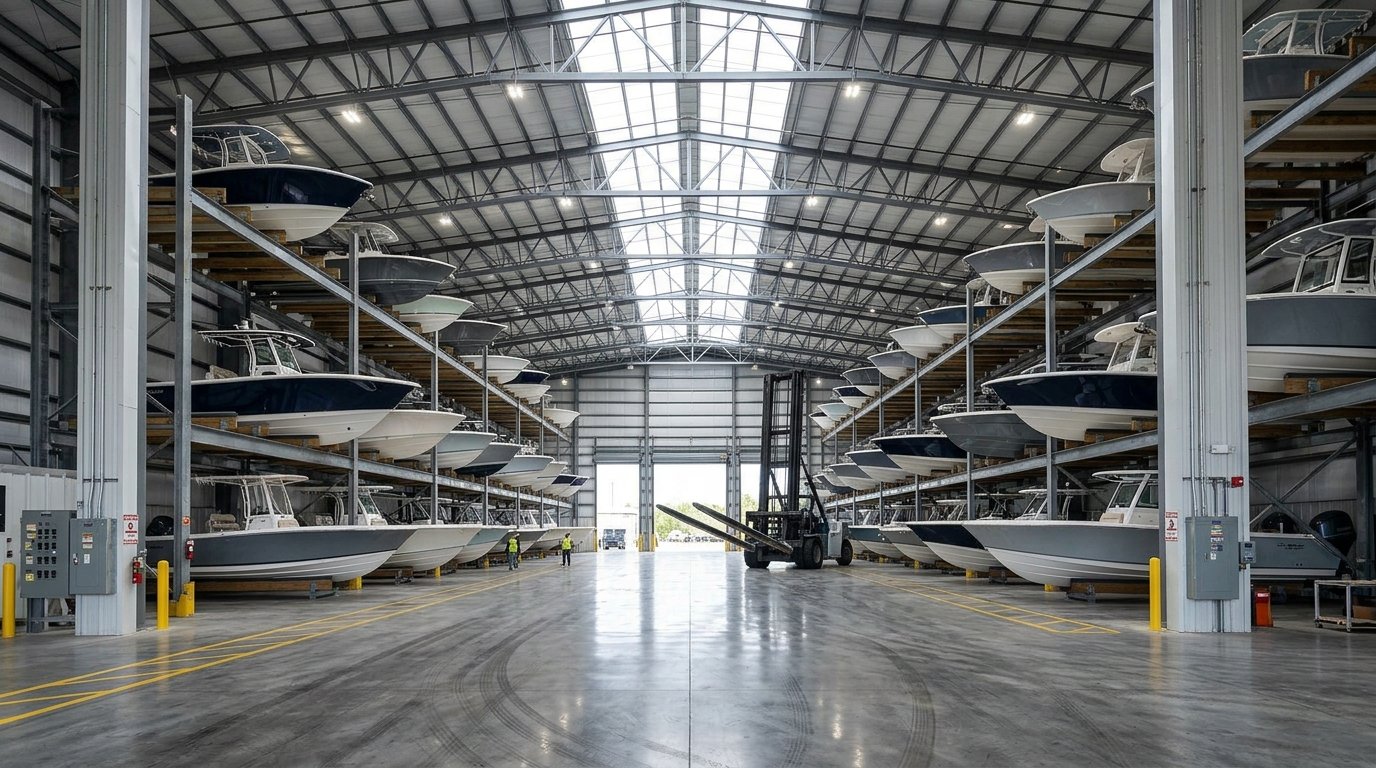
Dry Stack Boat Storage Cost Comparison by Vessel Size
Unlike standard trailer self-storage units billed at flat monthly rates, the total dry stack boat storage cost is calculated on linear overall length (LOA), often measuring from the tip of the bow pulpit or anchor roller to the trailing edge of the outboard propeller in trimmed-down position. Most commercial marinas impose a 20-foot to 22-foot minimum billing baseline for their dry stack boat storage cost calculations.
| Boat Class & Length | Average Beam / Height | Monthly Rate Range | Annual Investment | Included Services |
|---|---|---|---|---|
| 20ft Center Console / Skiff | 8ft beam / Standard T-top | $300 – $550 / mo | $3,600 – $6,600 | Unlimited splashes, hull rinse, staging dock slip |
| 24ft Bowrider / Walkaround | 8ft 6in beam / Hardtop | $380 – $750 / mo | $4,560 – $9,000 | Fuel dock valet, battery tender plug-in, ice loading |
| 28ft Twin-Engine Offshore | 9ft 6in beam / Radar arch | $550 – $1,050 / mo | $6,600 – $12,600 | Engine flush, washdown, overnight transient dockage |
| 32-36ft Triple-Engine Sportfish | 10ft+ beam / Upper station | $850 – $1,600 / mo | $10,200 – $19,200 | Heavy-lift forklift handling, high-bay indoor slot |
How Dry Stack Marina In-and-Out Service Operates
Dry rack storage provides a private valet boating experience. When evaluating your dry stack boat storage cost, keep in mind that you are paying for both shelter and dedicated labor. At facilities governed under standards established by the Association of Marina Industries (AMI), launch days run on an orchestrated operational schedule:
- Digital Call-Ahead Scheduling: Using the marina mobile app or phone line, you schedule your departure window 30 to 90 minutes in advance. You can request pre-staged fuel, bagged ice, and freshwater tank replenishment.
- Negative-Lift Marine Forklift Launch: Certified operators maneuver specialized marine Wiggins forklifts with oversized padded bunks. The forklift retrieves your vessel from steel rack tiers up to five levels high, travels across the basin, and lowers the boat smoothly into the water slip.
- Turn-Key Boarding: Your boat sits secured at the staging dock with mooring lines and fenders in place, ready for key-turn departure when you arrive.
- Return & Hull Care: Upon your return, you tie off at the retrieval dock and notify the dockmaster. Forklift operators lift the vessel out of the water, wash off salt spray and lake scum with pressurized freshwater, and return the hull to secure indoor storage.
Primary Factors Influencing Dry Stack Boat Storage Cost
Several geographic and mechanical parameters drive overall dry stack boat storage cost ranges:
1. Geographic Region and Coastal Demand
Coastal saltwater regions with year-round boating seasons command the highest monthly rates. In South Florida and the Florida Keys, average dry stack boat storage cost ranges between $28 and $42 per linear foot, while inland freshwater lakes offer competitive rates between $14 and $22 per foot.
2. Facility Structural Enclosure & Storm Ratings
Fully enclosed steel dry barns engineered to withstand Category 4 and Category 5 hurricane winds (140 to 160 mph) reflect a higher dry stack boat storage cost than open-air three-sided steel canopy racks. However, enclosed storage protects your electronics, canvas, and gelcoat from blistering UV degradation, eliminating the need for frequent marine hull and deck cleaning and compounding.
3. Height, Beam, and Weight Surcharges
Dry stack bunks are engineered around standard beam widths (typically 8 feet 6 inches). If your vessel features a wide 9.5-foot beam, radar arch, hardtop satellite dome, or outriggers, marinas assess an oversized bay fee that increases the baseline dry stack boat storage cost.
Dry Stack Boat Storage Cost vs. Wet Slips vs. Indoor Trailer Storage
When comparing marine options, balancing dry stack boat storage cost against slip fees and trailer storage reveals distinct trade-offs:
- Dry Stack vs. Marina Wet Slips: A wet slip allows immediate boarding 24/7 without advance notice. However, keeping a fiberglass hull in the water year-round requires bi-annual bottom anti-fouling paint ($1,200 – $2,500), monthly hull diver cleaning ($60 – $120/mo), sacrificial zinc replacements, and vulnerability to blistering. Factoring these maintenance savings makes your net dry stack boat storage cost highly competitive.
- Dry Stack vs. Private Garage / Trailer Storage: Storing on a trailer at home or in an indoor boat storage unit has a lower baseline price, but requires a heavy-duty tow vehicle, ongoing boat trailer maintenance, and the stress of busy public boat ramps on weekend mornings.
- Master Storage Overview: For an in-depth breakdown of all storage types, consult our comprehensive boat storage cost guide.
Hidden Fees to Inspect on Marina Dry Stack Contracts
Before signing a rack contract, verify what is included in your base dry stack boat storage cost quote:
- Daily Launch Limits: Most full-service marinas include unlimited splash and haul-outs. Some budget facilities cap complimentary launches at 2 to 4 per month, charging $40 to $75 for each additional forklift cycle, which can significantly inflate your monthly dry stack boat storage cost.
- Environmental & Fire Safety Fees: Marinas frequently levy a 2% to 4% monthly environmental compliance fee to fund spill-containment systems, EPA runoff filtration, and industrial fire sprinkler maintenance.
- Overnight Slip Transient Fees: If you plan a multi-day fishing trip and want to leave your boat in a water slip overnight rather than having it hauled back to the rack, check whether overnight dockage is included or billed at $2.00 to $3.50 per foot per night.
- Dockhand & Forklift Tipping Etiquette: While not a formal line item, tipping dockhands and forklift operators ($10 to $20 for exceptional preparation and careful handling) is customary marine etiquette that guarantees top-tier care for your boat.
- Winterization & Battery Maintenance: If storing during freezing northern months, ensure the marina offers winter service packages. Review our step-by-step boat winterization guide and marine battery care guide to keep electrical systems preserved off-season.
Frequently Asked Questions About Dry Stack Boat Storage Cost
Is dry stack boat storage cost cheaper than renting a wet slip?
In most coastal markets, base monthly rates for dry stack are comparable to standard open wet slips. However, when you factor in eliminating recurring bottom anti-fouling paint ($1,500/yr), hull diving fees ($1,000/yr), and premature gelcoat sun fading, the overall dry stack boat storage cost is substantially more economical over a 5-year ownership period.
What is the maximum boat size that dry stack marinas can accommodate?
Most standard marina dry racks accommodate vessels up to 32-35 feet with weights under 15,000 pounds. However, modern high-capacity marina dry stack facilities equipped with 30-ton marine forklifts can safely store vessels up to 45 feet in length and up to 30,000 pounds.
Can I perform maintenance or detail my boat while it is in the dry stack?
Yes. Reputable dry stack marinas provide designated “work racks” or staging ground slips. When requested, forklift staff place your boat on low ground stands with access to fresh water and 120V shore power so you or mobile mechanics can change engine oil, buff the gelcoat, or inspect bilge pumps.
Do I need to winterize an outboard engine stored in an indoor dry stack?
If your dry stack facility is located in a geographic zone where temperatures drop below 32 degrees Fahrenheit (0 degrees Celsius) and the barn is not climate-controlled with active heating, full engine and freshwater system winterization is mandatory to prevent cracked engine blocks and burst plumbing.
Published by Boat Maintenance Guide Editorial Desk. Inspected according to American Boat and Yacht Council (ABYC) safety standards and Association of Marina Industries marina rack operational guidelines.