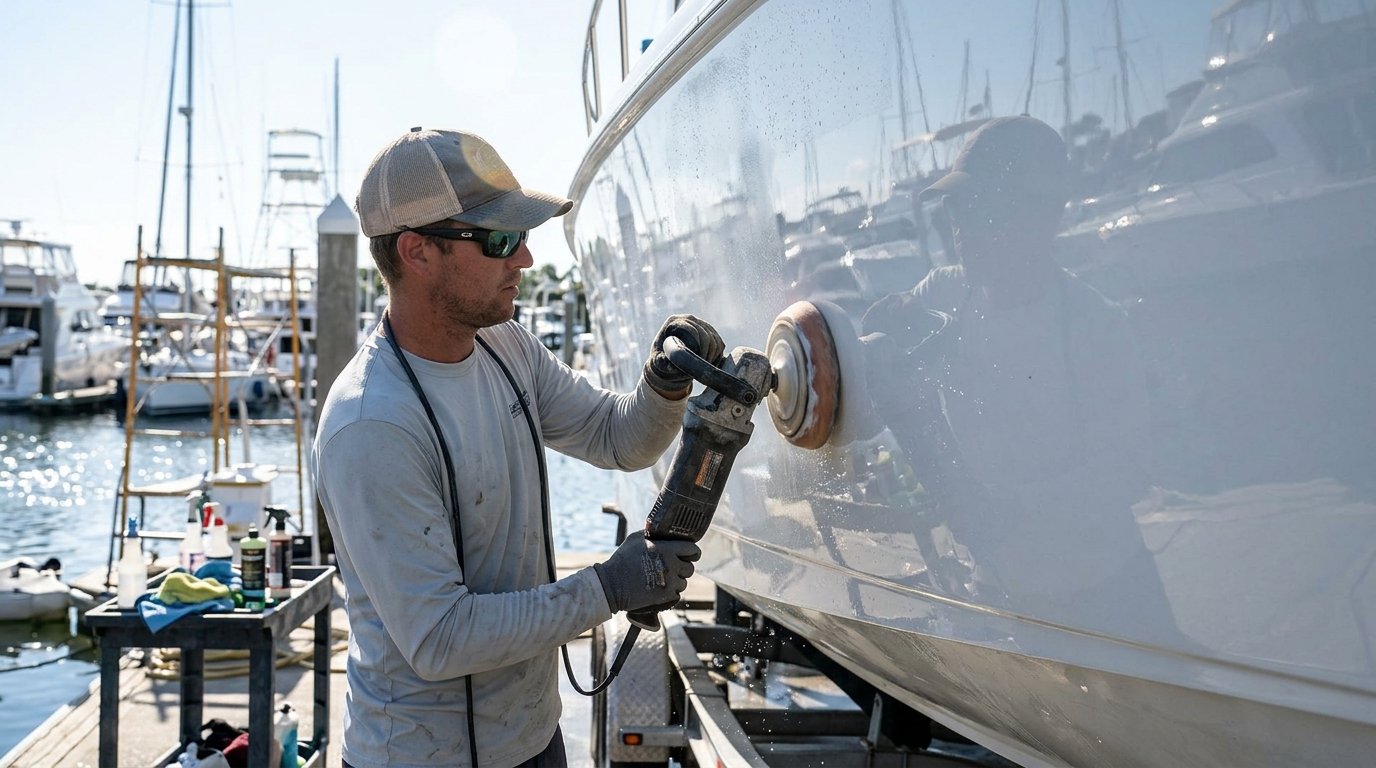
Maintaining the radiant shine of fiberglass and marine teak requires disciplined, technique-driven marine hull and deck cleaning. Marine environments are relentlessly harsh: intense ultraviolet (UV) radiation breaks down gelcoat polymers, mineral-rich saltwater leaves corrosive crusts, and tannins from lake vegetation stain pristine hulls with an unsightly brown waterline “mustache.”
This master marine hull and deck cleaning manual outlines the exact chemical formulas, machine compounding steps, and non-skid maintenance techniques used by professional yacht detailers to restore faded fiberglass and protect marine teak.
Marine Hull and Deck Cleaning Products & Applications
| Surface / Area | Common Degradation | Recommended Cleaning Chemical | Application & Sealing Tool |
|---|---|---|---|
| Waterline Scum / Tannin Line | Brown “mustache” staining, lake algae, yellow mineral crust | Oxalic acid or buffered hydrochloric waterline cleaner | Soft wash mitt; dwell 5 min; rinse thoroughly with fresh water |
| Oxidized Gelcoat Topsides | Dull chalky haze, loss of gloss, microscopic surface pores | Diminishing abrasive marine rubbing compound | Rotary buffer at 1,400 RPM with 100% twisted wool cutting pad |
| Molded Non-Skid Deck Pattern | Ground-in fish blood, sunscreen grease, dark mildew | Specialty non-skid deck cleaner with PTFE chelating agents | Medium-bristle deck brush; scrub in circular motions |
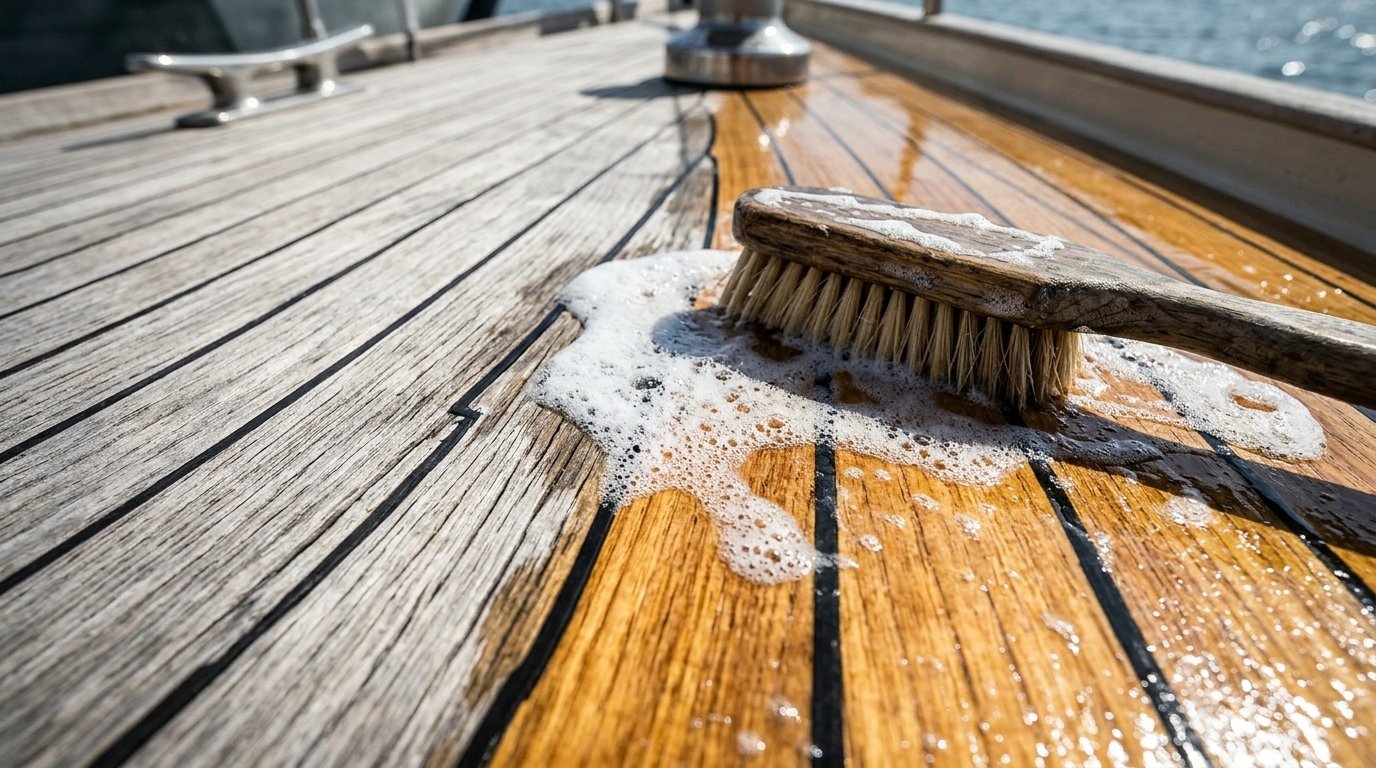
| Natural Marine Teak Trim | Silver weathered graying, green mildew, grain erosion | Two-part teak cleaner (alkaline cleaner + acid neutralizer) | Bronze wool or doodlebug scrubbing pad across grain; apply teak sealer |
Step 1: Waterline Scum & Tannin Stain Removal
Never scrub a stained waterline with abrasive scouring pads; coarse scouring scratches microscopic grooves into gelcoat that attract grime faster. Instead, use a chemical reaction:
- Spray an oxalic acid-based marine hull cleaner (such as Star brite Instant Hull Cleaner or Davis FSR) onto the dry waterline.
- Allow the solution to dwell for 3 to 5 minutes. The acid chemically chelates the iron tannins and mineral deposits, making the brown scum magically disappear without scrubbing.
- Rinse immediately with high-volume fresh water. Crucial: Acid cleaners strip away existing wax completely; always follow up with a protective marine sealant or ceramic coating.
Step 2: Restoring Chalky Oxidized Gelcoat
Unlike automotive clear coats (which are 2-3 mils thin), marine gelcoat is a thick, porous polyester resin layer (typically 20 mils thick). Restoring dull, chalky gelcoat requires a systematic three-stage polishing process:
- Heavy Cut Compounding: Using a rotary polisher (such as a Makita 9237C) set to 1,200-1,500 RPM with a heavy twisted wool pad, work a diminishing abrasive marine compound (like 3M Perfect-It Heavy Cutting Compound) in a 2×2 ft crosshatch pattern. Wool generates the necessary frictional heat to soften polyester resin and level microscopic pores.
- Finishing Polish: Switch to a dual-action (DA) orbital polisher with a yellow foam pad and a marine finishing glaze to eliminate swirl marks and hologram trails.
- Polymer / Ceramic Sealing: Seal the porous gelcoat using a high-grade fluoropolymer sealant or marine SiO2 ceramic coating to block ultraviolet rays for 6 to 12 months. Standard automotive carnauba wax melts quickly in blistering maritime sun and will wash away within weeks.
Step 3: Non-Skid Decks & Marine Teak Preservation
- Non-Skid Deck Care: Molded diamond non-skid surfaces trap dirt. Use a specialized deck wash containing chelating agents and polymers that coat the non-skid diamond peaks without making the deck slippery under wet boat shoes.
- Teak Restoration: Scrub teak across the wood grain rather than with the grain to avoid plowing out soft wood fibers. After cleaning with a two-part system, apply a breathable marine teak sealer with UV inhibitors rather than high-maintenance teak oil that turns dark and collects soot.
- For proper hull lay-up and trailering, review our boat storage cost guide and boat trailer maintenance checklist.
When planning your annual budget, accurate marine hull and deck cleaning metrics help you avoid unexpected expenses and extend vessel longevity.
Frequently Asked Questions About Marine Hull and Deck Cleaning
Can I wash my boat with household dish soap like Dawn?
No. Concentrated dish detergents are heavy grease-stripping surfactants formulated to cut cooking oils. Using Dawn on your boat strips away every trace of protective wax and polymer sealants, leaving your gelcoat completely unprotected against rapid UV oxidation.
How often should a fiberglass boat be waxed?
In high-UV sunbelt regions (Florida, Texas, California), boats stored outdoors should receive a thorough wax or synthetic sealant application every 3 to 4 months. In northern regions, applying a quality marine sealant at spring commissioning and again before winter storage is sufficient.
What is the difference between marine wax and automotive wax?
Automotive waxes are designed for thin polyurethane clear coats that operate on roads. Marine gelcoat is much more porous and subject to extreme saltwater salt crusting and intense water reflection UV magnification. Marine waxes and sealants feature higher melting points and aggressive UV absorbers.
How do I clean black mildew from marine vinyl cushions?
Use a designated marine vinyl cleaner or a mild solution of non-bleach antibacterial soap. Avoid pure chlorine bleach; bleach damages the polyester stitching threads, leading to split cushion seams within months. Follow with a marine vinyl protectant containing 303 UV blockers.
Published by Boat Maintenance Guide Detailers Desk. Inspected in accordance with American Boat and Yacht Council (ABYC) and environmental clean marina guidelines. For certified engineering specifications, consult official protocols published by U.S. Environmental Protection Agency (EPA Clean Boating).
Following this proven marine hull and deck cleaning strategy protects your marine investment, enhances safety on the water, and minimizes unexpected mechanical repairs. For ongoing maintenance schedules and certified specifications, revisit our marine hull and deck cleaning recommendations each season.