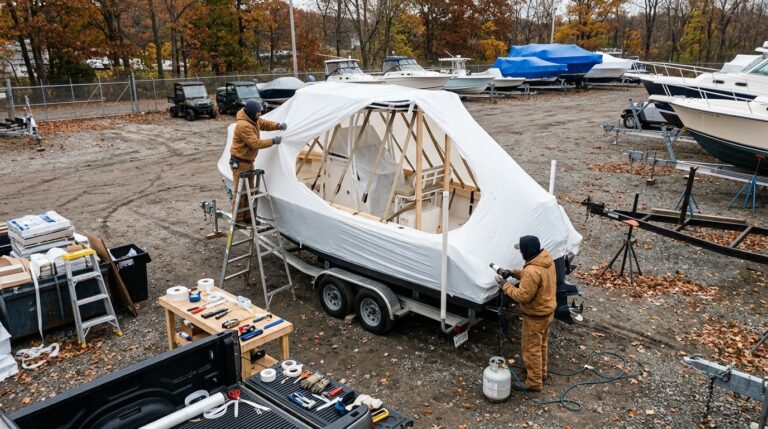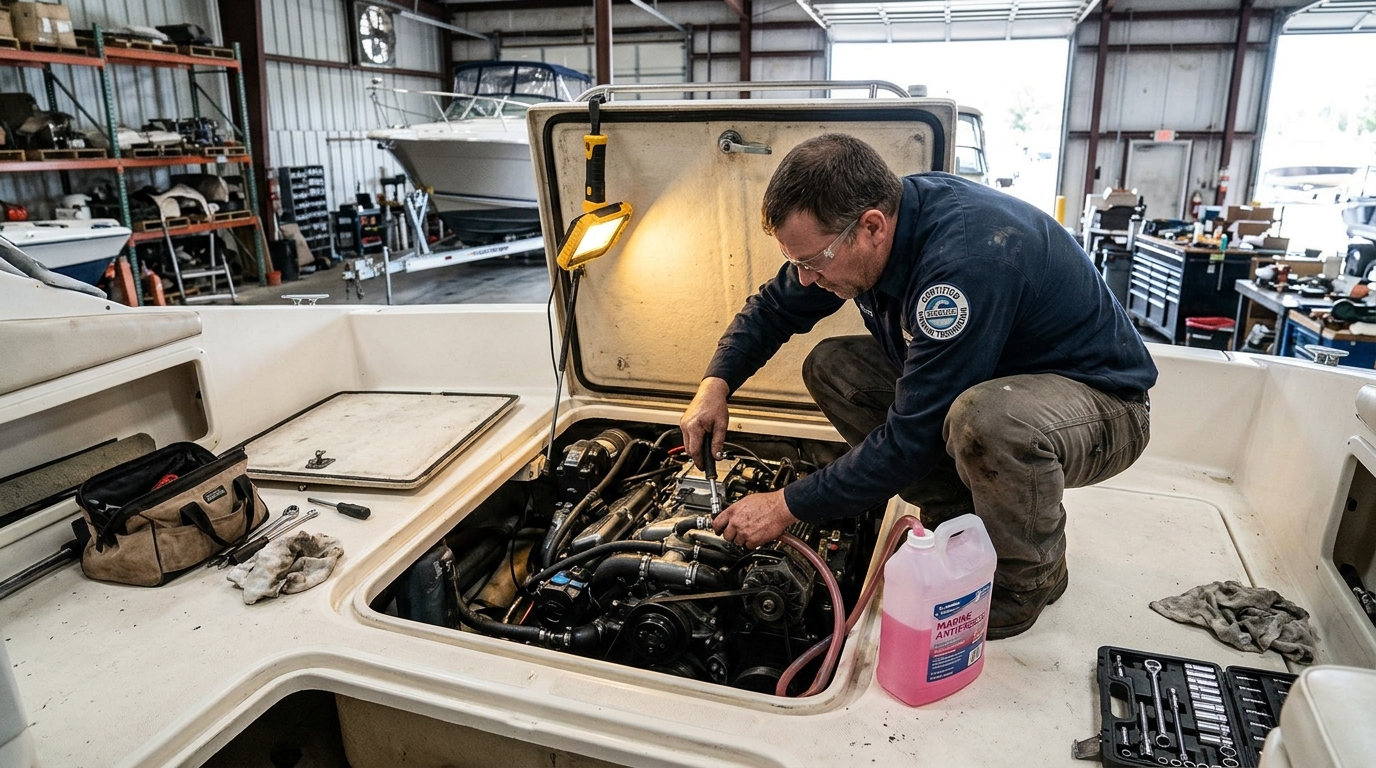
Learning how to properly winterize an inboard boat engine is the single most critical autumn maintenance task for owners of wakeboard boats, tournament ski boats, and inboard cruisers. Unlike outboard motors that naturally drain cooling water when trimmed vertically down, inboard and sterndrive engines feature complex cast-iron engine blocks, raw-water heat exchangers, and exhaust manifolds with low spots that trap standing water. If this water freezes, it expands with over 20,000 PSI of hydraulic force, splitting the cast-iron cylinder walls and destroying your engine.
Whether your boat is powered by a 5.7L Mercruiser, a 6.0L Indmar, or a PCM inboard V8, taking time to winterize an inboard boat engine correctly will save you from catastrophic engine replacement bills exceeding $8,000 to $12,000. In this comprehensive walkthrough, certified marine technicians explain the exact 5-step freeze-proofing protocol.
Why You Must Winterize an Inboard Boat Engine Before the First Freeze
Recreational marine engines draw raw water directly from lakes or oceans through a bottom sea strainer or through-hull fitting. This raw water circulates around cylinder sleeves and exhaust risers to absorb combustion heat before exiting through the exhaust tips. When you winterize an inboard boat engine, your goal is to evacuate every drop of untreated fresh water and replace it with non-toxic marine propylene glycol antifreeze with corrosion inhibitors.
Insurance claims data compiled by the BoatUS Foundation reveals that over 70% of winter boat freeze claims occur in southern and mid-latitude states where sudden, unexpected overnight cold snaps catch boaters unprepared. Waiting until freezing weather arrives is too late.
Inboard Winterization Supplies & Tool Checklist
| Required Material / Tool | Recommended Specification | Primary Function |
|---|---|---|
| Marine Non-Toxic Antifreeze | Propylene Glycol rated to -50°F or -100°F (5 to 8 gallons) | Flushes cooling passages, coats cast iron, stops freeze expansion |
| Marine Fuel Stabilizer | STA-BIL 360 Marine (or equivalent fuel treatment) | Prevents ethanol fuel phase separation and gumming |
| Aerosol Engine Fogging Oil | Marine-grade spray can with straw applicator | Protects cylinder walls, valves, and piston rings from rust |
| Marine Crankcase Oil & Filter | 25W-40 Synthetic Blend Marine Oil + OEM Filter | Removes acidic combustion blowby products before winter lay-up |
| Brass Pipe Plugs / Poke Wire | Wire coat hanger or small screwdriver | Dislodges rust scale and sediment blocking engine drain petcocks |
The 5-Step Inboard Boat Engine Winterization Protocol
Step 1: Stabilize Fuel & Warm the Engine
Begin your process to winterize an inboard boat engine by adding marine fuel stabilizer to your fuel tank at the winter storage ratio. Top the fuel tank to roughly 90% full to prevent moisture condensation. Connect water flusher muffs or a garden hose to the sea strainer. Start the engine and run it for 15 to 20 minutes until the thermostat reaches operating temperature (typically 160°F). Running the engine circulates stabilized fuel through the entire high-pressure fuel rail and warms the engine oil for quick draining.
Step 2: Change Engine Oil and Transmission Fluid
Never leave dirty engine oil in your crankcase over the winter. Combustion byproducts mix with fuel vapor to form corrosive sulfuric acids that pit rod bearings and crankshaft journals during months of storage. Warm oil pumps out easily through the dipstick tube using a 12V marine extraction pump. Replace the oil filter, pre-filling it halfway with fresh 25W-40 marine oil, and refill the crankcase to the dipstick full mark. Check the velvet drive or V-drive transmission fluid and top off as specified.
Step 3: Locate and Drain All Raw Water Drain Plugs
Shut off the engine. To safely winterize an inboard boat engine, you must locate and remove all raw water petcock drain plugs. On standard V8 inboard marine engines, you will find between 5 and 7 drain points:
- Two brass drain plugs on the sides of the engine block (one port, one starboard).
- Two drain plugs at the bottom corners of the exhaust manifolds.
- One drain plug on the raw water circulation pump hose.
- One drain plug on the power steering fluid cooler and transmission oil cooler.
- One drain on the raw water sea strainer bowl.
Crucial Mechanical Tip: Sand and rust flakes settle directly at the block drain ports. When you remove a brass plug, water might not flow out even if the block is full! Always poke a piece of stiff wire or a small screwdriver up into the drain hole until rusty sediment breaks free and a gush of water empties completely into the bilge.
Step 4: Flush with Marine Propylene Glycol Antifreeze
Once all raw water has drained out, reinstall the brass plugs and tighten hose clamps. Never rely solely on draining; trapped air pockets and residual water puddles inside cooling pockets can still cause localized freeze damage. You must pump pure, undiluted -100°F propylene glycol marine antifreeze through the engine until bright pink liquid exhausts out the stern.
Disconnect the raw water intake hose from the seacock and submerge it into a 5-gallon bucket of marine antifreeze. Start the engine; the sea pump will rapidly draw antifreeze into the engine. Run the engine until the bucket is nearly empty and pure pink fluid streams from the exhaust tips, then shut off the ignition immediately.
Step 5: Fog Cylinders and Service Electrical Systems
Remove the spark plugs. Spray aerosol marine fogging oil for 3 seconds directly into each spark plug hole to coat the upper cylinder walls and rings. Rotate the crankshaft half a turn with a breaker bar or bump the starter for one second with the kill switch disconnected. Reinstall the spark plugs or fit fresh marine spark plugs for spring. Disconnect your negative battery cables following our marine battery care guide and connect a multi-stage smart trickle charger.
Winter Lay-Up Storage & Freeze Protection Tips
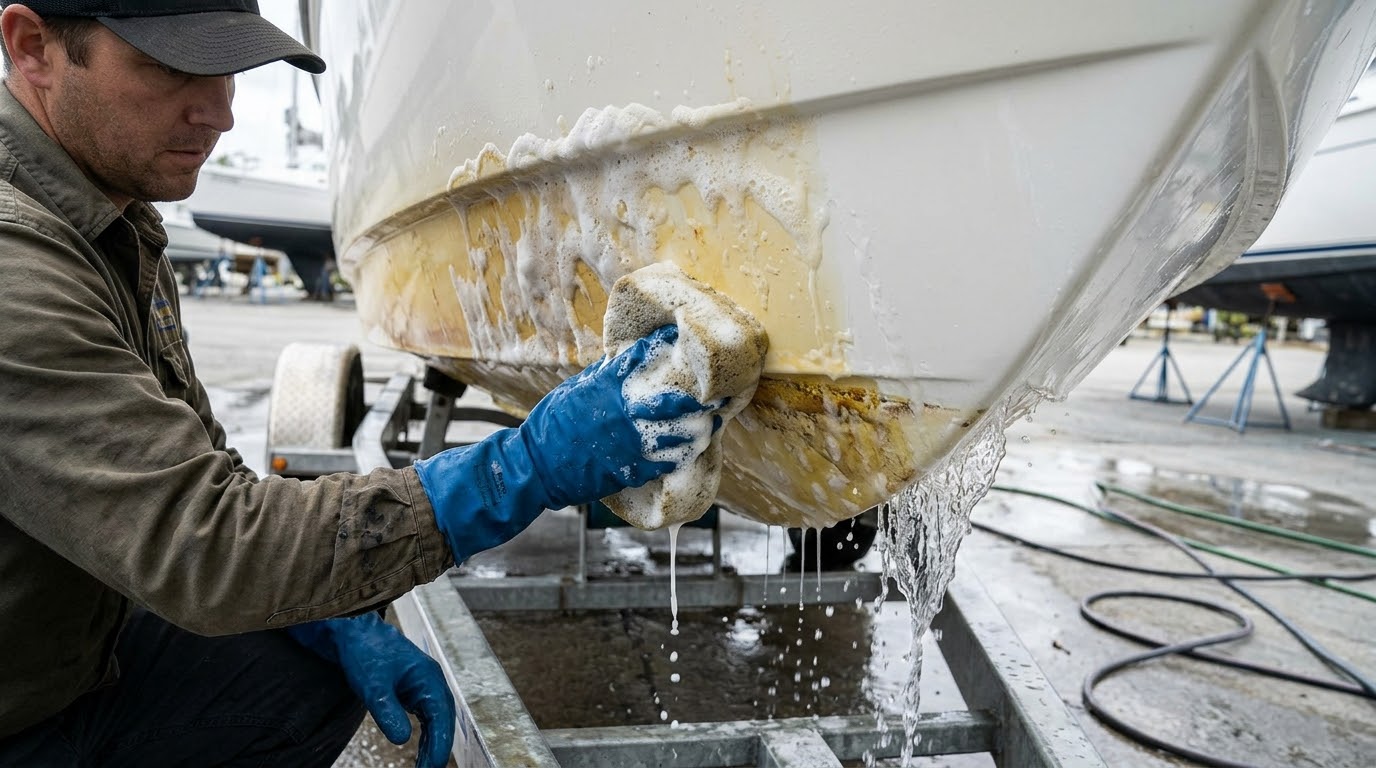
After you successfully winterize an inboard boat engine, protect the rest of your boat hull and cockpit from off-season moisture:
- Drain all freshwater sinks, washdown pumps, and livewells by pumping non-toxic pink RV/marine antifreeze through the faucets.
- For sterndrive models, lower the outdrive into the full down position so water drains from the exhaust snout, and check outdrive gear lube for signs of milky water contamination.
- Place moisture-absorbing calcium chloride desiccant tubs inside the cabin and engine compartment to prevent mildew spores.
- Review our master boat winterization guide for complete hull shrink-wrapping tips, and consult our outboard motor troubleshooting guide for universal ignition diagnostics.
Frequently Asked Questions About How to Winterize an Inboard Boat Engine
Can I use automotive green ethylene glycol antifreeze to winterize an inboard boat engine?
No. Automotive ethylene glycol antifreeze is highly toxic to pets, marine life, and aquatic ecosystems. When you launch your boat in the spring, whatever antifreeze remains in the cooling jackets will be pumped directly into the lake or ocean. Always use non-toxic, virgin propylene glycol marine antifreeze containing marine corrosion inhibitors.
How much marine antifreeze does it take to winterize an inboard boat engine?
A standard small block V8 inboard engine (such as a 5.0L or 5.7L) requires approximately 5 to 6 gallons of marine antifreeze. Larger big block V8 engines (6.0L, 7.4L, or 8.1L) with closed-cooling heat exchangers or V-drive configurations require 7 to 9 gallons for a thorough flush.
Is draining the engine block enough without adding antifreeze?
While draining removes the bulk of water, certified marine mechanics strongly advise against “dry block” winter storage. Any trapped pockets of water behind silt deposits will freeze and crack the block. Furthermore, bare cast-iron internal cooling jackets exposed to air and oxygen will rust aggressively throughout the winter, causing thick rust scale that clogs cooling passages next summer.
Do I need to winterize an inboard boat engine that has closed-loop fresh water cooling?
Yes. Closed-loop cooling systems (half-system or full-system) protect the internal engine block with permanent ethylene glycol coolant. However, the raw water side—including the heat exchanger bundle, sea water pump, raw water sea strainer, power steering cooler, and exhaust manifolds—still carries lake or ocean water that will freeze and burst if not drained and flushed with marine antifreeze.
Published by Boat Maintenance Guide Certified Marine Mechanics Desk. Inspected in accordance with American Boat and Yacht Council (ABYC) P-4 and lay-up guidelines established by the BoatUS Foundation.