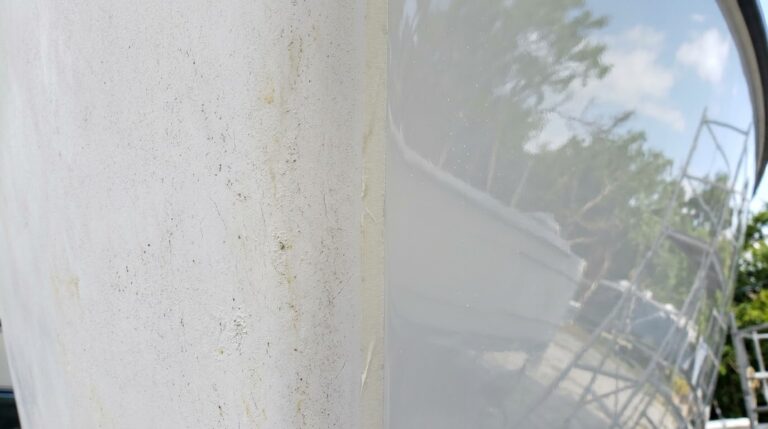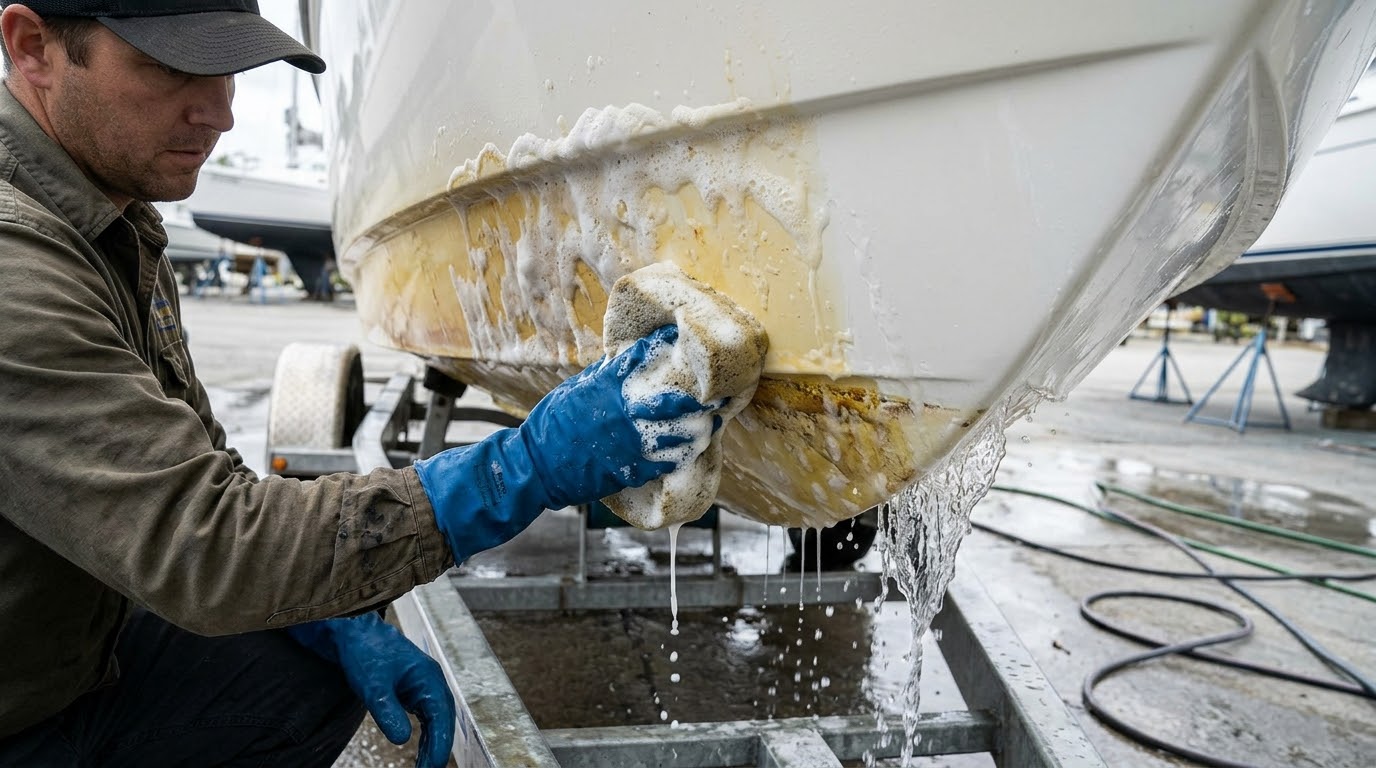
Few things ruin the pristine curb appeal of a fiberglass boat faster than the unsightly dark brown or yellowish “mustache” that forms along the hull bottom after a few weeks moored in fresh or brackish water. Learning how to properly remove boat waterline stain without scratching your porous gelcoat is an essential skill for every boat owner. Aggressive scrubbing with kitchen scouring pads or harsh wire brushes will permanently gouge your hull, creating microscopic crevices that attract grime and algae even faster.
Fortunately, you do not need abrasive sandpaper or hours of muscle-straining scrubbing to remove boat waterline stain discoloration. By harnessing the proven chemical chelation properties of marine-safe organic acids, you can dissolve years of baked-on tannin stains and mineral scum in under 10 minutes, restoring brilliant factory gelcoat shine. Below, professional yacht detailers explain the chemistry, application steps, and sealing protocols.
Understanding the Chemistry: Why Waterline Stains Form
Before attempting to remove boat waterline stain buildup, it helps to understand what you are fighting. That yellow-brown band is not standard dirt; it is a complex mineral-organic bond formed by two culprits:
- Vegetation Tannins: Decaying leaves, pine needles, and aquatic bark release organic tannic acids into lakes and rivers, turning the water tea-colored. Gelcoat is polyester resin filled with microscopic pores; when a boat sits in warm water, porous gelcoat absorbs these tannins deep into the resin matrix.
- Iron & Manganese Minerals: Freshwater lakes and coastal bays carry suspended iron oxide and manganese minerals that bond electrochemically with the absorbed tannins, creating an insoluble brown crust that ordinary boat soaps and pressure washers cannot touch.
Chemical Comparison: Oxalic Acid vs. Hydrochloric Acid vs. Vinegar
To safely remove boat waterline stain discoloration without stripping your gelcoat or etching your aluminum trailer frame, choosing the correct chemical formula is paramount:
| Chemical Agent | Cleaning Effectiveness | Gelcoat Safety Rating | Trailer & Hardware Corrosion Risk |
|---|---|---|---|
| Oxalic Acid (Star brite / FSR) | Superior (Chelates iron tannins instantly) | Safe (Gentle organic acid, will not etch resin) | Low (Harmless to galvanized steel when rinsed promptly) |
| Hydrochloric / Muriatic Acid (MaryKate) | Extremely Fast (Aggressive) | Moderate (Overuse dulls and burns gelcoat luster) | Severe (Instantly discolors bare aluminum trailers and pits bunks) |
| Household White Vinegar (Acetic Acid) | Very Poor (Cannot dissolve baked-on tannins) | 100% Safe | Zero risk |
Professional detailers strongly recommend oxalic acid-based gel formulas (such as Star brite Instant Hull Cleaner, Davis FSR, or DIY powdered wood bleach). Oxalic acid chemically reacts with insoluble iron oxide, converting it into soluble iron oxalate that dissolves and rinses away with zero elbow grease required.
Step-by-Step Guide: How to Remove Boat Waterline Stain Fast
Step 1: Prep and Environmental Safety
Always work in a well-ventilated outdoor wash bay or driveway on a cool, overcast day. Wear chemical-resistant nitrile gloves and protective eyewear. Cover galvanized or painted trailer frame rails beneath the hull with plastic drop cloths or wet the trailer frame continuously with a garden hose; running acid drops can leave light streaks on bare aluminum trailer tongues. Always follow clean marina guidelines established by the U.S. Environmental Protection Agency (EPA Clean Boating).
Step 2: Apply the Oxalic Acid Gelcoat Cleaner
Ensure the boat hull is completely dry; water on the gelcoat will dilute the acid, weakening its cleaning power. Pour the oxalic acid cleaner into a plastic bucket or spray bottle. Using a soft car wash mitt, sponge, or foam paint roller, apply the solution liberally along the stained yellow waterline band, working in 6-foot sections from bottom to top to avoid chemical drip channeling.
Step 3: Allow Chemical Dwell Time (The Magic Reaction)
Allow the solution to dwell on the gelcoat for 3 to 5 minutes. Do not scrub with stiff brushes! As you watch, the chemical chelation reaction takes place: the yellow-brown discoloration will fade, turn clear, and vanish before your eyes. On extremely thick, multi-season scum lines, reapply a second light coat over stubborn areas and let sit for another 2 minutes.
Step 4: High-Volume Freshwater Rinse
Flush the section thoroughly with high-volume fresh water from a garden hose or pressure washer (holding the tip at least 18 inches away from gelcoat). Ensure all runoff is completely rinsed off the trailer frame, tires, and ground pavement. The fiberglass will dry to a brilliant, factory-fresh snow-white finish.
Step 5: Mandatory Gelcoat Wax Sealing
Here is the single biggest mistake boaters make: leaving the clean hull bare! Acid hull cleaners completely strip every trace of protective wax and polymer sealants, leaving porous polyester resin microscopic pores wide open to the elements. If you put your boat back in the water without sealing it, the waterline will stain twice as dark within two weeks!
Always follow your cleaning by applying a durable fluoropolymer marine sealant or marine ceramic coating (such as Meguiar’s Flagship Marine Wax or Collinite 845). The sealant fills the pores, creating a hydrophobic slick barrier that causes future waterline scum to wipe off with a simple microfiber towel.
Long-Term Hull Care & Gelcoat Preservation
Now that you know how to easily remove boat waterline stain residue, maintain your entire topsides and cockpit according to professional standards:
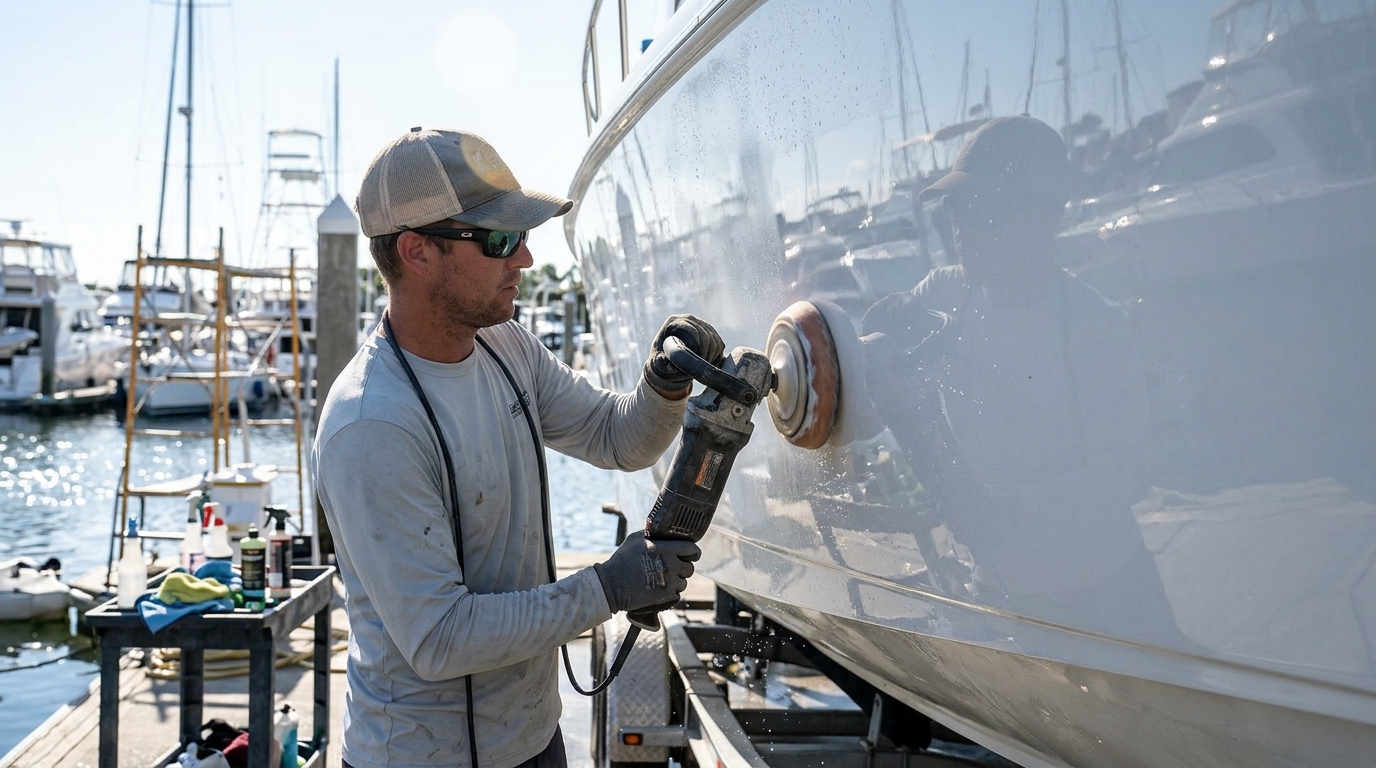
- Inspect for gelcoat chalking and oxidation above the waterline; follow our master marine hull and deck cleaning guide for machine compounding and rotary polishing techniques.
- If you plan to store your boat on a trailer between trips, review our boat trailer maintenance checklist and master boat storage cost guide.
Frequently Asked Questions About How to Remove Boat Waterline Stain
Can I use a Magic Eraser (melamine foam) to remove boat waterline stains?
Certified marine detailers strongly advise against using Magic Erasers on boat gelcoat. Melamine foam is chemically equivalent to 3,000 to 5,000-grit ultra-fine sandpaper. While it removes the yellow stain mechanically, it acts like abrasive micro-sanding that strips your gelcoat’s clear gloss sheen, leaving dull, scratched patches that absorb dirt even faster.
Does oxalic acid damage the boat’s bottom paint or gelcoat graphics?
When used as directed and rinsed within 5 to 10 minutes, oxalic acid will not harm intact fiberglass gelcoat or vinyl hull decals. However, it will strip existing boat wax completely, and repeated prolonged dwell times on copper-based bottom anti-fouling paint can cause localized bleaching. Mask off bottom paint with painter’s tape before application.
How often should I remove boat waterline stains?
Waterline cleaning should be performed whenever discoloration becomes visible, typically mid-season (July/August) and again during autumn haul-out before winter lay-up. Applying a high-grade marine polymer sealant every 3 to 4 months significantly delays stain formation.
Why won’t household bleach remove the yellow boat waterline stain?
Chlorine bleach is an oxidizing disinfectant formulated for mold, mildew, and organic bacterial slime; it does not possess chelating properties for mineral-iron bonds. Bleach simply slides off mineral-tannin bonds without dissolving them and can degrade fiberglass polyester resins over time.
Published by Boat Maintenance Guide Detailers Desk. Inspected in accordance with American Boat and Yacht Council (ABYC) and EPA clean marina environmental preservation standards.